
CEAT - Tyre Sidewall Design
The most seen surface no one designed.
The sidewall is the vertical face of the tyre, sitting between the tread and the wheel rim. It is one of the most information-dense surfaces in everyday product design, and one of the most frequently seen. It is visible when a vehicle is parked, in a showroom, at a service station or during replacement. Long before the tread performs on the road, the sidewall communicates what the product is.
Yet that communication has traditionally been limited to regulation rather than intention. It identifies. It informs. It rarely expresses. For decades, no one designed it.
The reason is understandable. The sidewall is the tyre's most vulnerable surface, thinner than the tread and exposed to kerb strikes, potholes and under-inflation. It carries mandated markings for width, aspect ratio, construction type, rim diameter, load index and speed rating. The remainder of the surface sits largely unaddressed. Visible on every car, on every road, at eye level. Entirely ignored.
Sketch Development
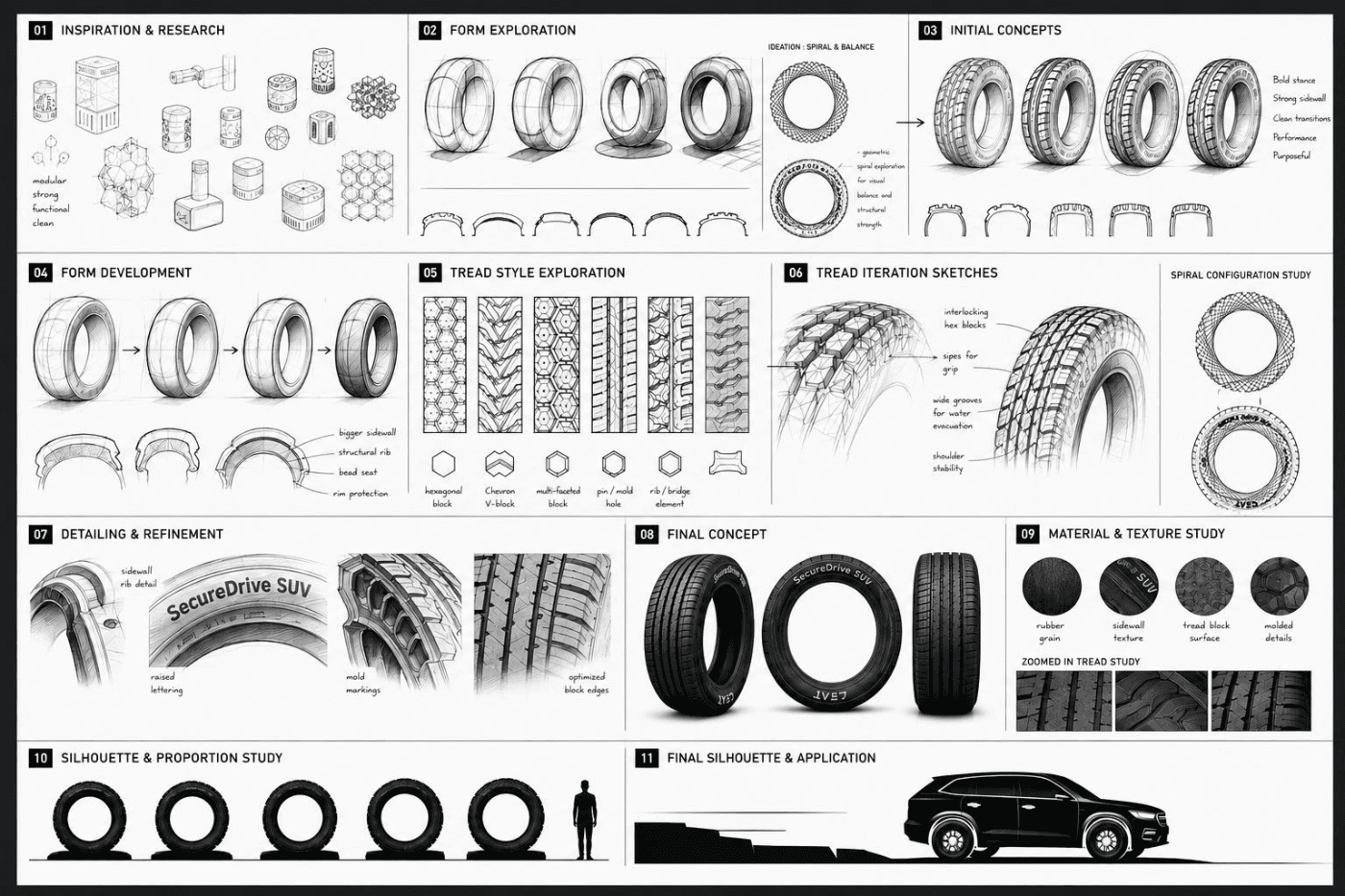
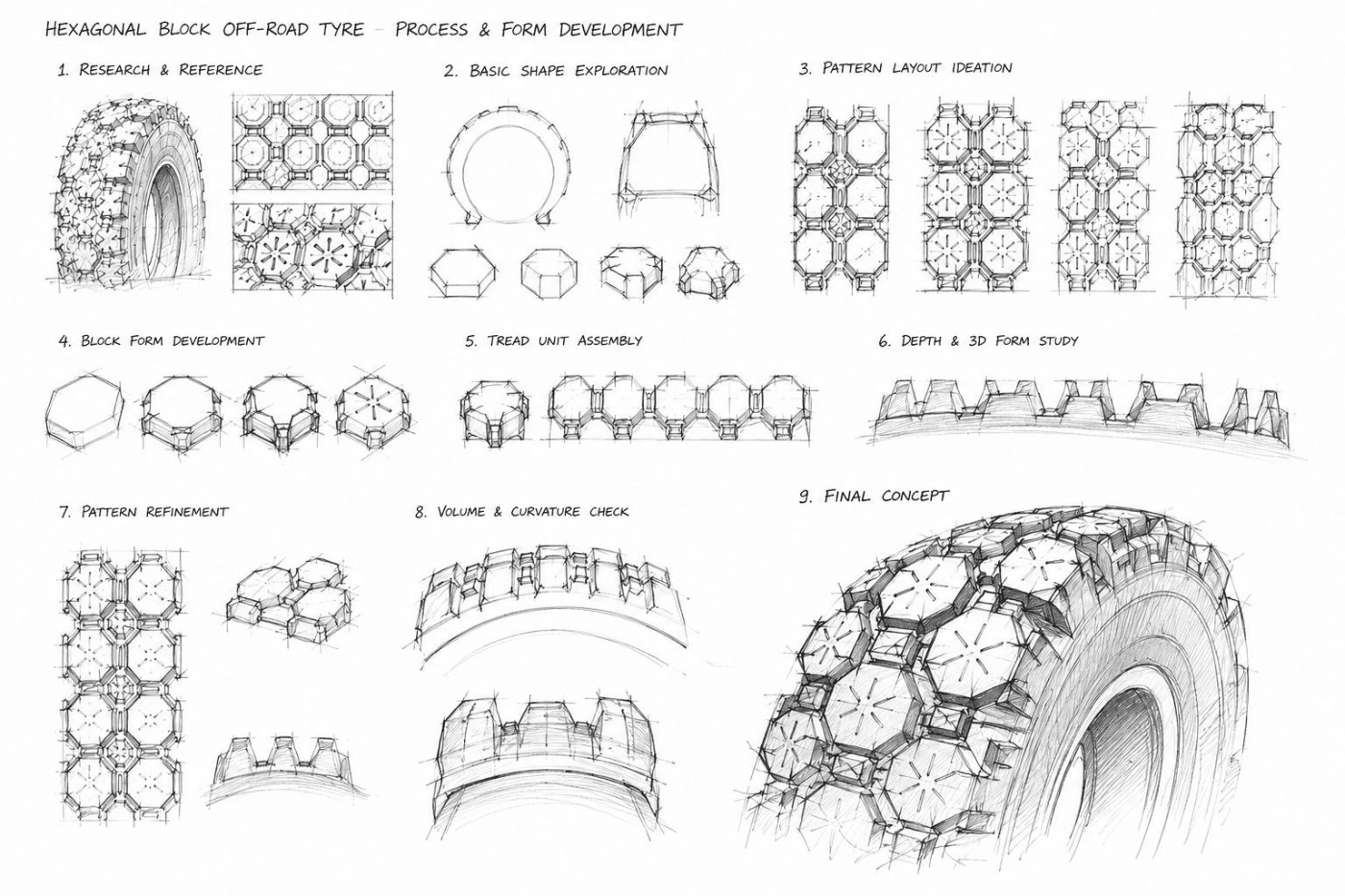
The research begins with this constraint. Tyre engineering is defined by what the industry calls the magic triangle: wet grip, rolling resistance and noise. Each vertex carries consequence. Improve one, and the others are implicated. CEAT's sub-brands occupy distinct positions within this balance. SecuraDrive holds wet grip and low rolling resistance in equilibrium. CrossDrive anchors itself in traction across unpredictable terrain. EcoDrive prioritises acoustic refinement for electric vehicles, where the absence of engine noise makes tyre sound more dominant inside the cabin.
The design process begins by establishing hierarchy. Regulatory information is mapped and standardised across the product portfolio so mandatory markings remain consistent and legible. Brand communication is then organised alongside it, allowing the parent identity, sub-brand and performance differentiators to exist as one coherent system.
What the project earns through this rigour, it spends on texture. Working alongside tyre engineers and mould-casting specialists, the research explores how rubber itself can become a communicative surface. Serrations, directional ribs and suede-like finishes are developed not as ornament but as semantic cues. Patterns tighten or release according to category. Directional ribs suggest movement. Softer finishes invite pause. Typography gains depth through shadow.
Final Outcome
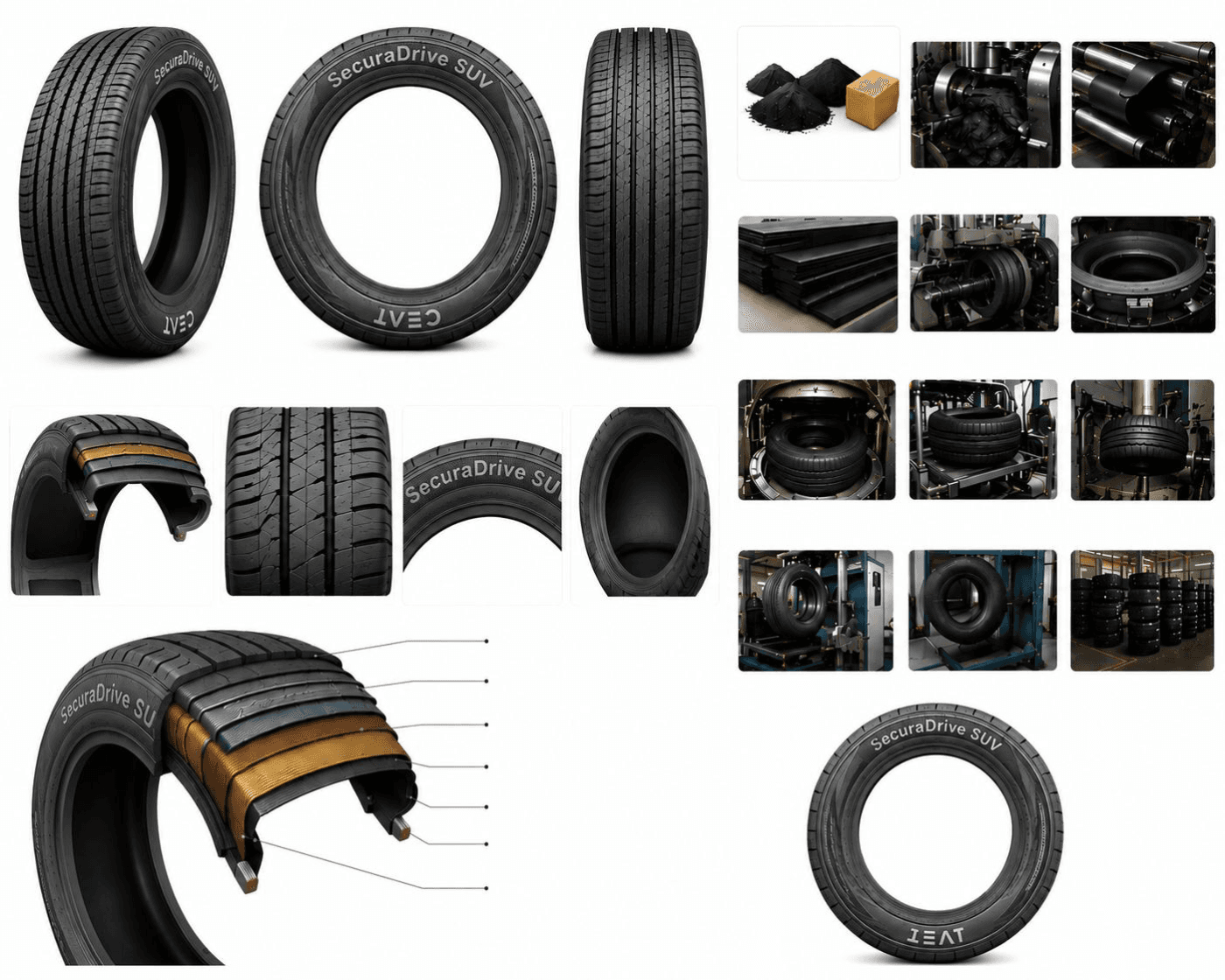
The final sidewall brings together technical information, brand identity, product differentiation and tactile expression within one coherent system.
Fine sidewall texturing creates a sophisticated finish and supports UV resistance.
A ribbed protector ring helps protect against kerb rubs and abrasion, while sturdy shoulder blocks support cornering grip and handling.
The sidewall is no longer simply a surface for information. It becomes the face of the tyre, expressing its character before it ever meets the road.
More in Research
All projects